

Commercial Odor Removal After Water Damage: What Every Property Manager in South Florida Must Know
Last updated: February 2026 · Reading time: 12 min
A burst pipe at 2 a.m. A tenant’s frantic call about a musty smell that “won’t go away.” A vacant unit that reeks of mildew after a weekend storm. If you manage rental properties in South Florida, these scenarios aren’t hypothetical — they’re inevitable.
According to the Insurance Information Institute (2024), water damage and freezing claims account for nearly $13,000 per incident on average, making them the second most common — and second most expensive — homeowner insurance claim in the United States. But here’s what the numbers don’t tell you: the lingering odor after water damage can cost you far more than the water itself.
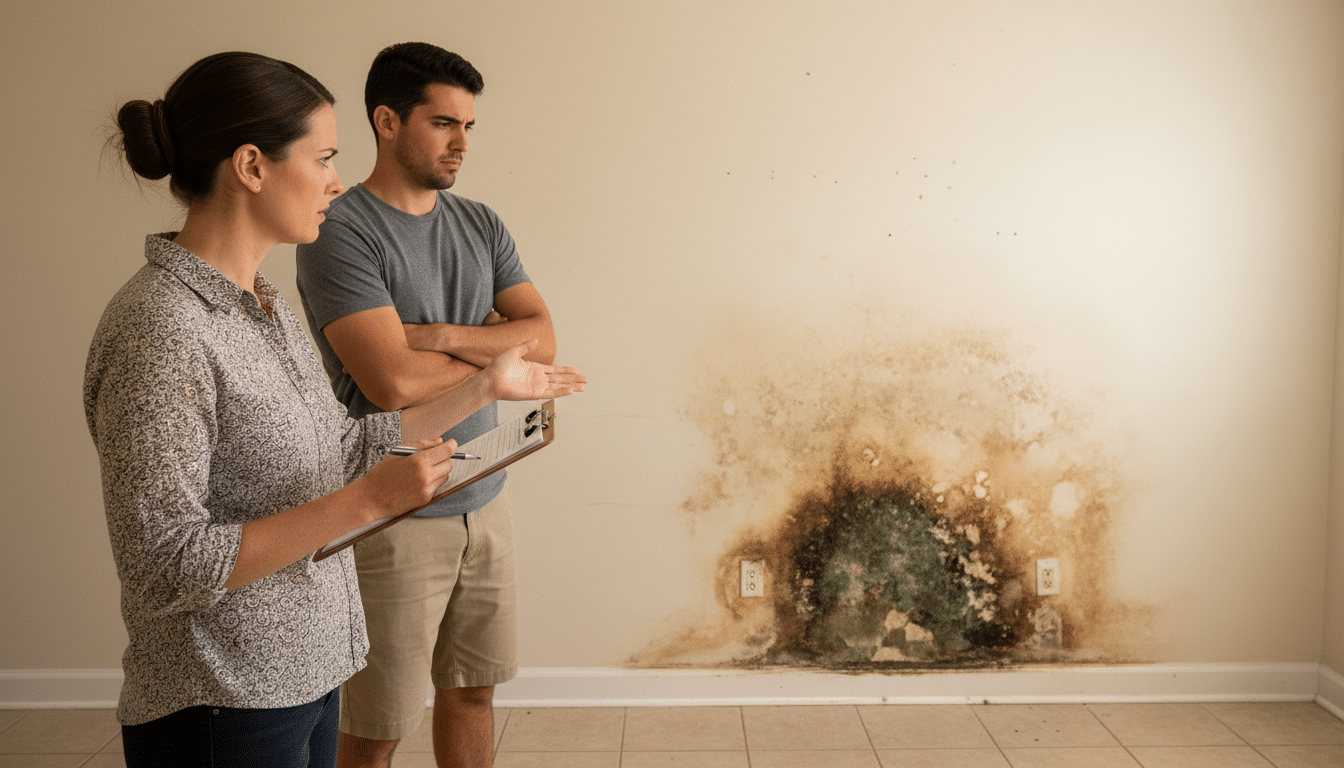
Persistent odors drive tenant turnover, trigger health complaints, invite code violations, and silently erode your property’s market value. In a market as competitive as South Florida — where humidity accelerates mold growth within 24 to 48 hours (EPA, 2023) — a delayed or amateur odor remediation response can turn a manageable incident into a six-figure liability.
This guide breaks down exactly what happens when water damage odors go untreated, the commercial-grade protocols that actually work, and why partnering with a specialized odor removal service in Florida like Number One Restoration is the smartest investment a property manager can make.
The Hidden Cost of Ignoring Odors After Water Damage
Why Odors Persist Long After the Water Is Gone
Water evaporates. Odors don’t — at least not on their own. When water infiltrates porous materials like drywall, carpet padding, wood subfloors, and HVAC ductwork, it creates a breeding ground for bacteria, mold spores, and volatile organic compounds (VOCs). South Florida’s average relative humidity of 74% (NOAA, 2024) acts as a catalyst, keeping moisture trapped in building materials long after visible water has been extracted.
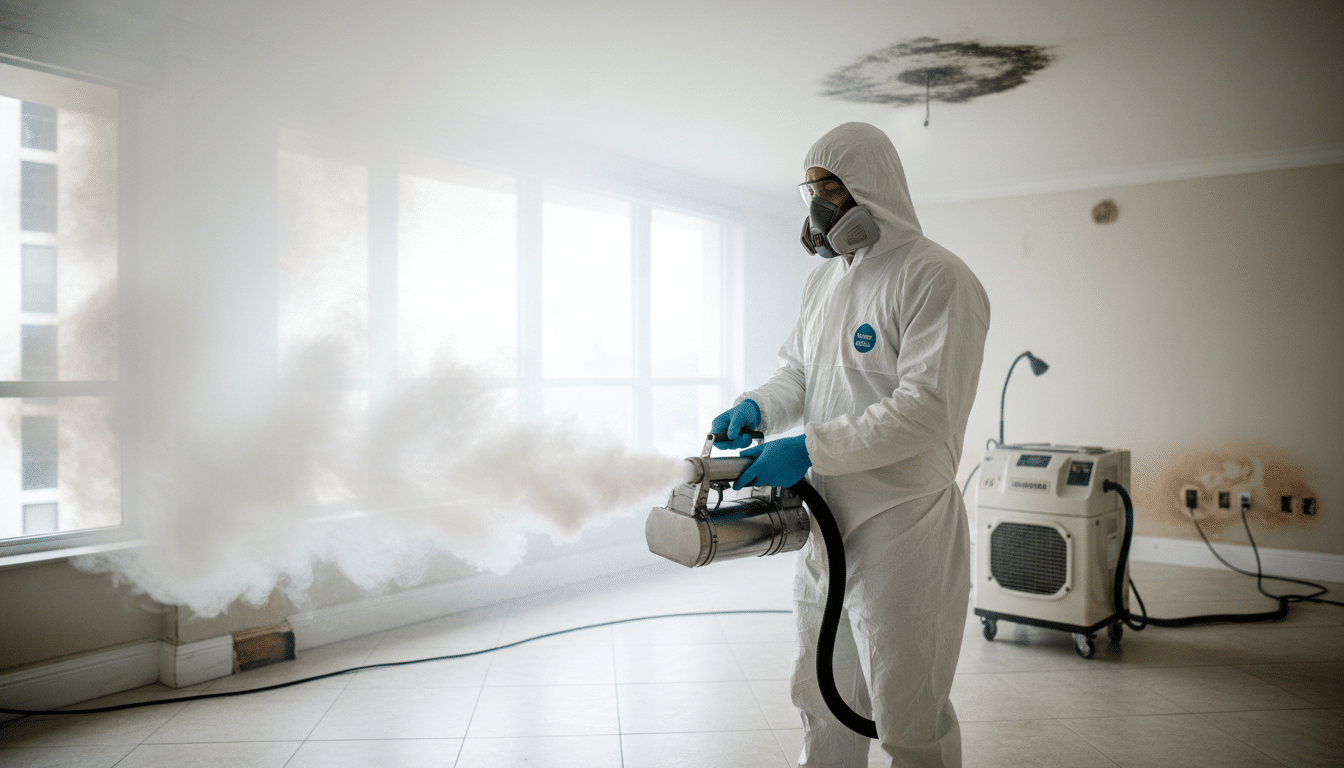
The result? A persistent musty, sour, or chemical smell that standard cleaning products cannot eliminate. According to SERVPRO’s commercial restoration data, odor molecules can penetrate surfaces at a microscopic level, requiring specialized equipment — such as hydroxyl generators, thermal foggers, and ozone machines — to neutralize them at the molecular level. This is precisely why professional odor removal is not optional — it’s essential.
Financial Impact on Rental Properties
The financial consequences of untreated odors extend far beyond the cost of remediation:
- Vacancy losses: A unit with persistent odor can sit vacant 2–3× longer than market average, costing $1,500–$4,000/month in lost rent in South Florida’s rental market.
- Tenant turnover: The National Apartment Association (2023) estimates the average cost of tenant turnover at $3,500–$5,000 per unit, including marketing, cleaning, and lost income.
- Property devaluation: Unresolved water damage and associated odors can reduce a property’s appraised value by 10–25%, according to Cotton GDS commercial restoration reports.
- Legal liability: Under Florida Statute §83.51, landlords must maintain premises in compliance with building, housing, and health codes. Persistent mold odors can constitute a habitability violation, exposing property managers to lawsuits and potential damages ranging from $10,000 to $100,000+ in tenant rights cases (Florida Bar, 2024).
Health Risks That Trigger Liability
The EPA classifies mold-related odors as indicators of potential indoor air quality hazards. Prolonged exposure to mold spores and mycotoxins — the compounds responsible for that “musty” smell — has been linked to:
- Respiratory infections and aggravated asthma
- Allergic reactions (rhinitis, dermatitis)
- Headaches, fatigue, and cognitive impairment (“sick building syndrome”)
For property managers, a single tenant health complaint tied to water damage odor can trigger an OSHA investigation (in commercial properties), an insurance claim dispute, or a personal injury lawsuit. When odors are accompanied by visible mold growth, the liability exposure multiplies — making immediate professional intervention non-negotiable.
What Property Managers Must Do — Guided by Number One Restoration Experts
Handling odor removal after water damage is not a DIY task. The complexity of South Florida’s climate, building codes, and the science behind odor remediation demands professional intervention from the very first step. Here’s the action plan every property manager should follow — with Number One Restoration’s odor removal specialists leading the process.
Step 1: Immediate Response — Call Number One Restoration Within the First 24 Hours
The moment water damage is reported, your first call should be to Number One Restoration’s 24/7 emergency line. Their certified technicians arrive on-site with commercial-grade moisture detection equipment — including infrared cameras and hygrometers — to assess the full extent of water infiltration, including areas invisible to the naked eye.
Why does timing matter? The IICRC S500 Standard establishes that mold colonization begins within 24–48 hours of water exposure. Every hour of delay increases remediation costs exponentially. Number One Restoration’s rapid water damage restoration response ensures moisture mapping and extraction begin immediately, preventing odor-causing bacteria and mold from taking hold.
What Number One Restoration Does in the First Visit:
- Complete moisture mapping of the affected property using thermal imaging
- Water extraction with truck-mounted and portable commercial extractors
- Deployment of industrial dehumidifiers and air movers to begin structural drying
- Initial antimicrobial treatment to inhibit mold and bacterial growth
- Detailed damage documentation with photos and moisture readings for insurance claims
Step 2: Professional Odor Source Identification — Let the Experts Diagnose
Many property managers make the costly mistake of masking odors with air fresheners or consumer-grade deodorizers. This approach fails because it doesn’t address the source. Number One Restoration’s IICRC-certified odor remediation specialists use a systematic diagnostic process to identify exactly where odor-producing compounds are hiding.
Their team inspects:
- HVAC ductwork and air handlers — a primary odor distribution pathway in South Florida’s central AC systems
- Wall cavities and insulation — where trapped moisture creates anaerobic bacteria colonies
- Subfloor materials — especially under tile and laminate, where water wicks undetected
- Carpet padding and tack strips — which absorb and retain odor molecules even after surface cleaning
Pro tip from Number One Restoration: “If you can smell it, the contamination is already advanced. By the time odor is perceptible, microbial colonies have been active for days. That’s why we always recommend a professional inspection even if the water damage seems ‘minor.'”
Step 3: Commercial-Grade Odor Elimination — Number One Restoration’s Proven Protocols
Unlike general cleaning companies, Number One Restoration deploys a multi-layered odor elimination protocol specifically designed for South Florida’s high-humidity environment:
Hydroxyl Generator Treatment
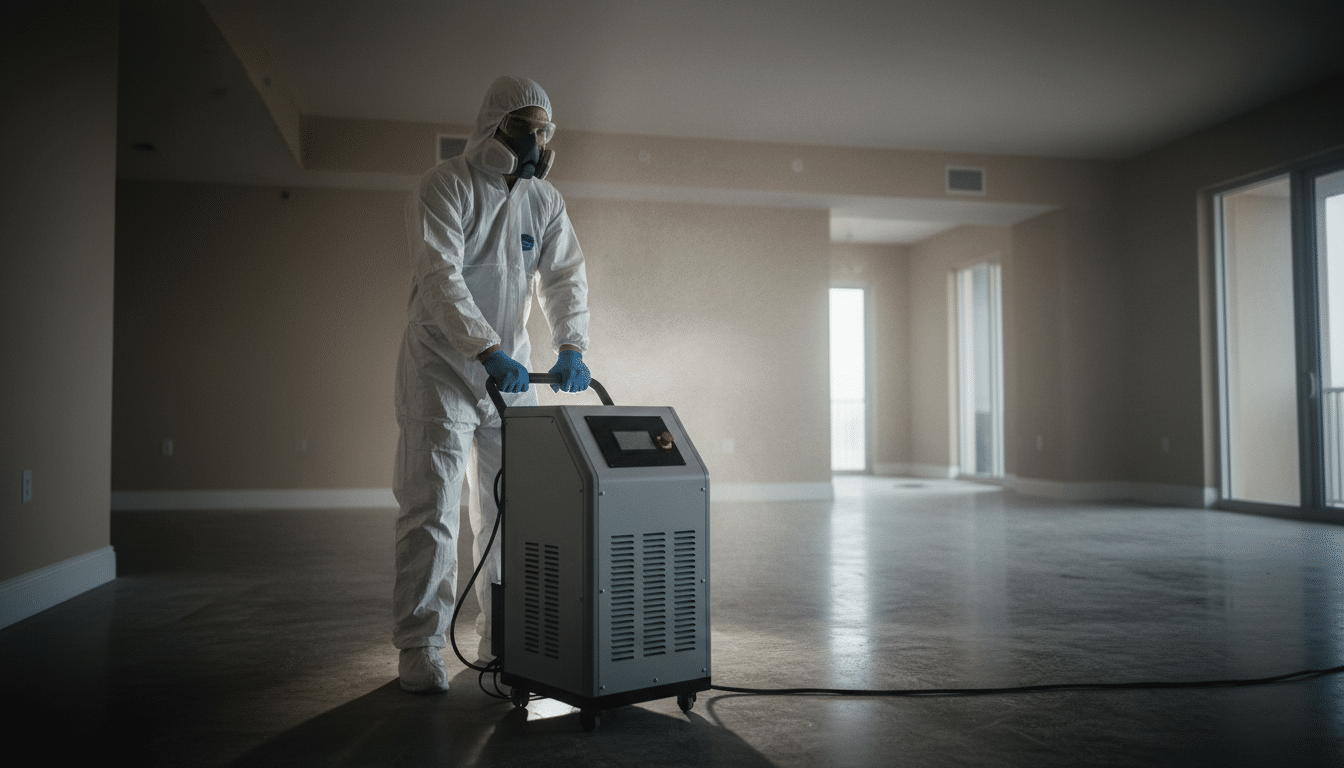
Safe for occupied spaces, hydroxyl generators produce hydroxyl radicals that break down odor molecules, VOCs, and airborne pathogens at the molecular level. Number One Restoration uses commercial-grade units capable of treating up to 40,000 cubic feet — ideal for multi-unit properties and commercial spaces.
Thermal Fogging
For severe odor penetration, their technicians deploy thermal foggers that produce a heated deodorizing vapor. This vapor penetrates the same porous materials that odor molecules have infiltrated — drywall, wood, fabric — neutralizing them at the source. This technique is particularly effective for smoke and sewage-related odors that accompany Category 2 and Category 3 water damage.
Ozone Shock Treatment
In unoccupied units, Number One Restoration can deploy high-output ozone generators for a controlled “shock treatment” that oxidizes and destroys odor-causing organisms. This method achieves results that are impossible with consumer products and is especially effective for units that have been vacant with untreated water damage.
HVAC Sanitization and Duct Cleaning
Because South Florida properties rely heavily on central air conditioning, odor molecules circulate continuously through the HVAC system. Number One Restoration’s duct cleaning and sanitization service eliminates odor reservoirs within the air distribution system — a step that most general contractors skip entirely.
Step 4: Verification and Documentation — Number One Restoration’s Quality Guarantee
After treatment, Number One Restoration doesn’t just declare the job done. Their team conducts:
- Post-remediation air quality testing to verify mold spore counts are within acceptable levels
- Moisture verification readings to confirm all materials have returned to dry standard
- Photographic documentation of the entire process — critical for insurance claims and legal protection
- A detailed remediation report that property managers can share with tenants, owners, and insurers
This documentation is invaluable. In the event of a future tenant complaint or insurance dispute, having a professional remediation report from a licensed, insured company like Number One Restoration provides legal protection and proof of due diligence.
Step 5: Preventive Maintenance Partnership
The smartest property managers in South Florida don’t wait for the next water damage incident. They establish an ongoing preventive maintenance relationship with Number One Restoration that includes:
- Quarterly HVAC inspections and duct cleaning to prevent mold accumulation
- Annual moisture audits of high-risk areas (bathrooms, kitchens, laundry rooms, exterior walls)
- Priority emergency response — existing clients receive expedited service during storm season
- Customized maintenance plans tailored to portfolio size and property types
→ Contact Number One Restoration today to schedule a free property assessment and learn how their preventive maintenance programs can save you thousands in emergency remediation costs.
Cost Comparison: DIY vs. Professional Odor Remediation
One of the most common questions property managers ask is: “Can’t we just handle this in-house?” The short answer is no — and the numbers prove it.
| Factor | DIY / General Cleaning | Number One Restoration (Professional) |
|---|---|---|
| Initial Cost | $200–$800 | $1,500–$5,000 (depending on severity) |
| Odor Recurrence Rate | 70–85% within 30 days | Less than 5% with full protocol |
| Mold Risk Addressed | Surface only — hidden mold untreated | Complete — including wall cavities, subfloor, HVAC |
| Time to Resolution | Weeks to months (repeated attempts) | 2–5 days (one-time comprehensive treatment) |
| Vacancy Duration | 30–90+ days (odor persists) | 5–10 days maximum |
| Insurance Documentation | None — may void claim | Full documentation for claim support |
| Legal Protection | None — increases liability exposure | Certified remediation report = proof of due diligence |
| True Cost Over 12 Months | $8,000–$25,000+ (repeated treatments, vacancy, turnover, potential lawsuits) | $1,500–$5,000 (one-time, problem solved) |
Sources: SERVPRO commercial data (2024); Cotton GDS restoration cost analysis; Number One Restoration project records.
The math is clear: professional odor remediation by Number One Restoration costs 60–80% less than the cumulative cost of failed DIY attempts, extended vacancies, and potential legal exposure.
Why South Florida Properties Face Unique Odor Challenges
The Humidity Factor
South Florida’s subtropical climate creates a perfect storm for persistent odors after water damage. With average humidity levels between 70–80% year-round (NOAA, 2024), moisture trapped in building materials takes significantly longer to dry than in arid climates. This extended moisture exposure accelerates microbial growth and VOC production — the primary sources of post-water-damage odors.
Hurricane and Storm Season Amplification
From June through November, South Florida’s hurricane season introduces additional water intrusion risks: roof leaks, window seal failures, flooding, and storm surge. The National Hurricane Center reports that even tropical storms can dump 6–12 inches of rain in 24 hours, overwhelming drainage systems and infiltrating properties that survived the wind damage unscathed.
Number One Restoration’s team has extensive experience with post-hurricane water damage restoration and odor remediation — a specialty that general contractors simply cannot match. Their storm season preparedness program ensures property managers have a response plan in place before the next event.
Aging Building Infrastructure
Many of South Florida’s rental properties were built in the 1970s–1990s, with plumbing, roofing, and HVAC systems that are at or beyond their expected lifespan. Aging infrastructure means more frequent water intrusion events — and more opportunities for odor-causing contamination to take hold in materials that are already compromised. Left unchecked, these conditions often lead to hidden mold infestations that compound the odor problem exponentially.
Frequently Asked Questions
How quickly should I call Number One Restoration after water damage occurs?
Immediately — ideally within the first 2–4 hours. Mold and odor-causing bacteria begin colonizing within 24–48 hours of water exposure (EPA, 2023). Number One Restoration offers 24/7 emergency response across South Florida, ensuring technicians arrive on-site rapidly to begin moisture extraction and antimicrobial treatment before odors develop. The faster you call, the lower the remediation cost and the shorter the unit downtime. Request emergency service here.
Can air fresheners or consumer deodorizers eliminate water damage odors?
No. Consumer products only mask odors temporarily without addressing the source. Water damage odors originate from microbial growth and VOCs embedded deep within porous materials — drywall, subfloors, insulation, and HVAC ductwork. Only commercial-grade treatments like hydroxyl generators, thermal fogging, and ozone shock treatment — deployed by certified professionals through a professional odor removal service — can neutralize odor molecules at the source and prevent recurrence.
How much does professional odor removal cost for a rental property?
Professional odor remediation typically ranges from $1,500 to $5,000 depending on the severity of contamination, property size, and the number of affected systems (HVAC, subfloor, walls). While this may seem higher than DIY alternatives, the true cost of amateur remediation — including repeated treatments, extended vacancies, tenant turnover, and potential legal liability — averages $8,000–$25,000+ over 12 months. Number One Restoration provides free on-site assessments and detailed estimates before any work begins.
Does Number One Restoration work directly with insurance companies?
Yes. Number One Restoration has extensive experience working with all major insurance carriers in South Florida. Their team provides comprehensive documentation — including moisture readings, photographic evidence, remediation protocols, and post-treatment verification reports — that meets insurance claim requirements. This documentation streamlines the claims process and maximizes reimbursement for property managers and owners. Their services span water damage restoration, mold removal, and odor elimination — all fully documented for insurance purposes.
What certifications should I look for in an odor remediation company?
Look for IICRC certification (Institute of Inspection, Cleaning and Restoration Certification) — the industry gold standard. Specifically, certifications in WRT (Water Damage Restoration Technician), AMRT (Applied Microbial Remediation Technician), and OCT (Odor Control Technician) are essential. Number One Restoration’s technicians hold all relevant IICRC certifications and maintain active Florida state licensing and insurance — providing property managers with full confidence and legal protection.
Protect Your Properties — Partner with Number One Restoration Today
Water damage odors are not a cosmetic nuisance — they are a financial, legal, and health liability that grows more expensive with every day of inaction. As a property manager in South Florida, your reputation and your portfolio’s profitability depend on how quickly and effectively you respond.
The difference between a $2,000 professional remediation and a $25,000 nightmare is one phone call — and the timing of that call.
Number One Restoration is South Florida’s trusted partner for commercial odor removal after water damage. With 24/7 emergency response, IICRC-certified technicians, commercial-grade equipment, and a proven track record with property management companies across Miami-Dade, Broward, and Palm Beach counties, they deliver results that protect your investment and keep your tenants safe.
Their comprehensive service ecosystem covers every stage of the restoration process — from emergency water damage restoration and mold remediation to complete odor elimination — ensuring no step is missed and no odor returns.
📞 Contact Number One Restoration now for a free property assessment.
Don’t wait for the next tenant complaint. Don’t gamble with DIY solutions. Partner with the experts who eliminate odors at the source — permanently.
Sources
- Environmental Protection Agency (EPA). (2023). A Brief Guide to Mold, Moisture, and Your Home. epa.gov/mold
- Insurance Information Institute. (2024). Facts + Statistics: Homeowners and Renters Insurance. iii.org
- National Oceanic and Atmospheric Administration (NOAA). (2024). South Florida Climate Data. weather.gov
- National Apartment Association. (2023). Survey of Operating Income & Expenses in Rental Apartment Communities.
- Florida Legislature. (2024). Florida Statute §83.51 — Landlord’s Obligation to Maintain Premises. leg.state.fl.us
- IICRC. (2022). S500 Standard for Professional Water Damage Restoration. iicrc.org
- Cotton GDS. (2024). Commercial Water Damage Restoration Cost Analysis.
- SERVPRO. (2024). Commercial Odor Removal Services and Data.


