

Emergency Roof Tarping & Board-Up 24/7 in Tampa and Spring Hill, FL: Protection After Storms
When a storm hits Florida’s Gulf Coast, the damage doesn’t end when the wind dies down. 🌪️ A lifted roof, a shattered window, or a fallen tree leaves your property exposed to rain, humidity, and even intruders. In that moment, emergency tarps and board-up services become your home or business’s first line of defense.
At Number One Restoration, we provide 24/7 emergency tarping and board-up in Tampa and Spring Hill, FL, with immediate response to protect your property while the full storm damage restoration in Florida is coordinated. In this guide, we explain what these services are, why every hour counts, and exactly what to do step by step. 👇
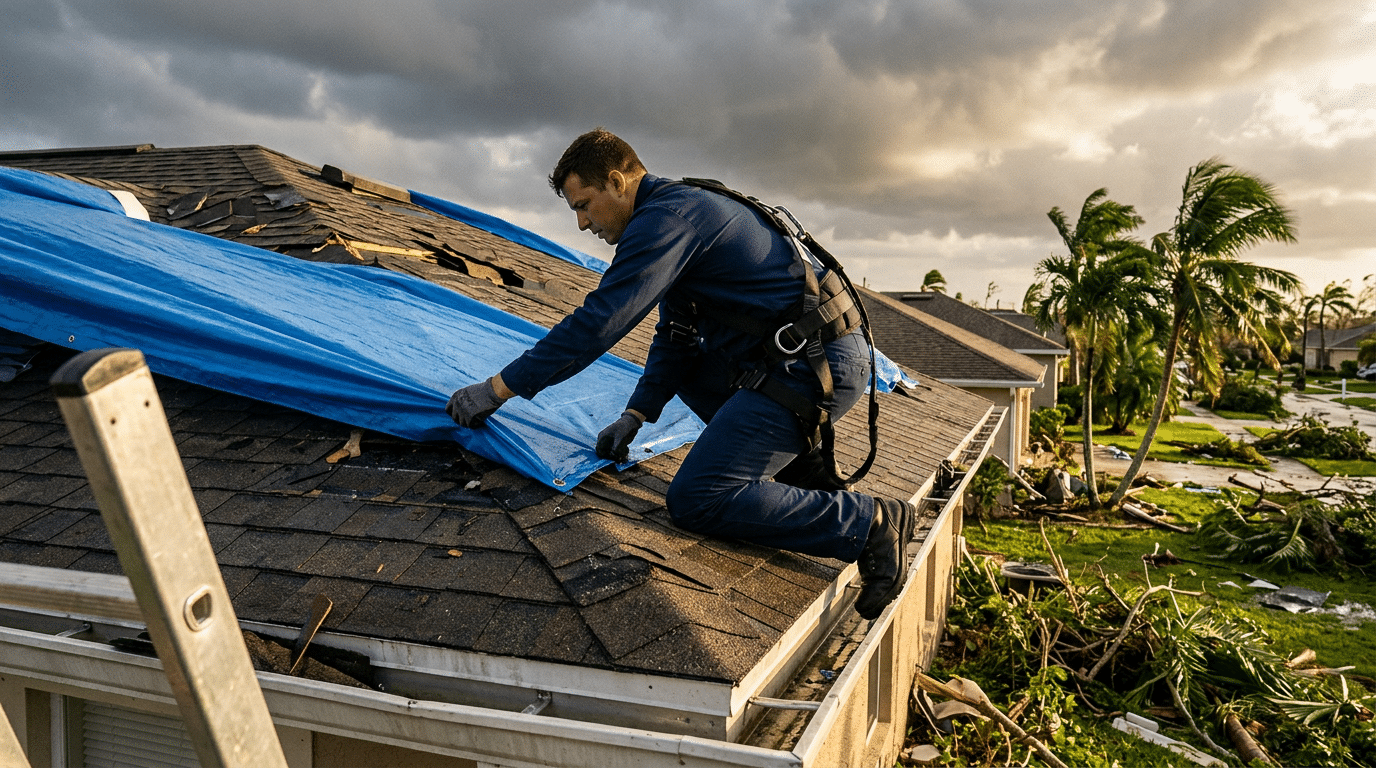
🛡️ What Are Emergency Tarps and Board-Up Services?
These are two temporary mitigation services that seal off openings in your property after a severe weather event:
Emergency roof tarp: a reinforced plastic cover installed over a damaged roof to keep rainwater out. This is not a hardware store tarp: professionals use heavy-gauge tarps, properly anchored to withstand additional wind while the permanent repair is scheduled.
Board-up: covering windows, doors, and other structural openings with plywood or other impact-resistant materials. It protects against rain, wind, animals, and break-ins, especially if the property will be sitting vacant.
Both services share the same goal: stopping the chain reaction of damage. A single unsealed opening can turn a $2,000 roof repair into a $20,000+ interior loss within days. 😱
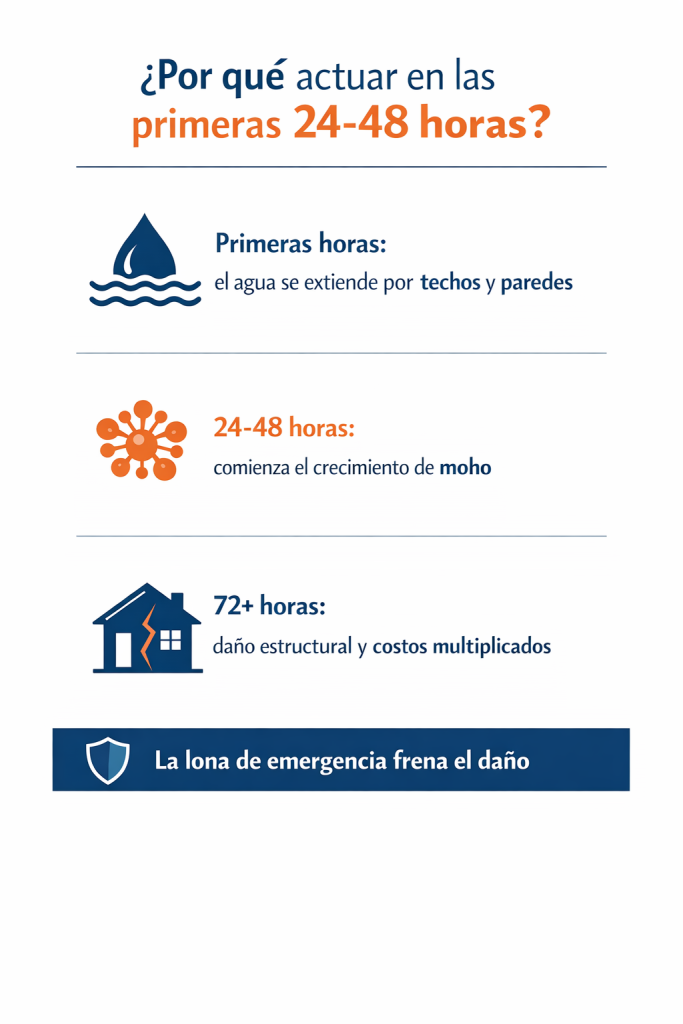
⏱️ Why the First 24 to 48 Hours After a Storm Are Critical
In the subtropical climate of Tampa and Spring Hill, ambient humidity exceeds 70% for much of the year. That means water entering through a damaged roof doesn’t just evaporate: it soaks into drywall, insulation, and flooring.
The real problem is how fast things deteriorate:
- First hours: water spreads by gravity, saturating ceilings, walls, and belongings.
- 24 to 48 hours: mold growth begins. If you want the exact timeline, read our breakdown of how fast mold grows after water damage.
- 72 hours and beyond: structural damage worsens, odors set in, and the cost of water damage restoration in Florida multiplies.
That’s why insurance carriers require homeowners to take reasonable mitigation measures. Tarping or boarding up immediately doesn’t just protect your house: it protects your claim. ✅
🏠 Do You Need a Tarp, Board-Up, or Both? A Quick Guide by Damage Type
| Scenario | Recommended Solution | Urgency |
|---|---|---|
| Lifted shingles or roof puncture | Emergency roof tarp | 🚨 Immediate |
| Windows broken by wind or debris | Plywood board-up | 🚨 Immediate |
| Tree fallen onto the structure | Debris removal + tarp + board-up | 🚨 Immediate |
| Destroyed garage or entry door | Reinforced board-up | ⚠️ Within 24 hours |
| Minor fascia or soffit damage with leakage | Partial tarp + inspection | ⚠️ 24 to 48 hours |
| Vacant vacation property after a storm | Full board-up + tarp | 🚨 Immediate |
If you’re unsure about the extent of the damage, do not climb on the roof. 🚫 Wet surfaces and weakened structures cause thousands of injuries every year. A professional crew assesses the damage safely and documents everything for your insurance company.
🔧 How Professionals Install an Emergency Roof Tarp
A poorly installed tarp is almost as dangerous as having none at all: wind rips it off, water pools in sagging pockets, and it ends up leaking anyway. The professional process includes:
- Safety assessment: checking roof stability before anyone climbs up.
- Measuring and cutting: the tarp must extend at least 3 to 4 feet beyond the damaged area in every direction.
- Anchoring with wood strips: the tarp edges are wrapped around boards and fastened to the structure, not just to loose shingles.
- Edge sealing: prevents wind from lifting the tarp and water from running underneath.
- Photo documentation: before-and-after evidence for your insurance claim.
If you’d like to dig into the technique, check out our detailed guide on how to properly tarp a roof. Board-up follows a similar logic: plywood cut to size, anchored to the structural frame, and reinforced at the corners.
🌴 Tampa and Spring Hill: Two Zones, One Shared Risk
Although they sit less than an hour apart, Tampa (Hillsborough County) and Spring Hill (Hernando County) face different risk profiles:
Tampa: dense urban development, intense summer thunderstorms, hurricane winds funneled through the bay, and an aging housing stock with vulnerable roofs. Urban water damage is common, and our Tampa water damage repair company responds to emergencies across the entire metro area.
Spring Hill: a residential area with abundant tree cover, which increases roof damage from fallen trees during hurricanes and tropical storms. Its proximity to the Gulf coast also raises the risk of storm surge and prolonged rainfall.
In both cities, hurricane season (June through November) demands a plan. If you don’t have one yet, review our Florida hurricane season alert and preparedness guide to get ready before the next event. 📋
💰 Does Insurance Cover Emergency Tarps and Board-Up?
In the vast majority of Florida homeowners policies, yes. Emergency mitigation measures like tarping and board-up are typically covered because they prevent a larger loss. In fact, your policy most likely requires you to take them.
Three keys to keeping your claim objection-proof:
- Document everything: photos and video of the damage before any work begins, and of the finished job afterward.
- Use a licensed contractor: invoices from certified companies carry far more weight than a hardware store receipt.
- Act fast: if you wait weeks and the damage gets worse, the insurer can argue negligence.
For a complete action plan after roof damage, read our guide on what to do if a storm damages your roof, where we walk through documentation and insurance steps in detail. 📑

⭐ Why Choose Number One Restoration in Tampa and Spring Hill?
Because a tarp is not just plastic and nails: it’s the difference between a minor repair and a major rebuild. Our team delivers:
- 🚨 24/7 response: we take emergency calls day, night, and weekends, even during hurricane season.
- 🎓 IICRC-certified technicians: correct installation the first time, following industry standards.
- 📸 Complete insurance documentation: we work directly with your carrier to speed up the claim.
- 🔄 End-to-end service: after tarping and board-up, we handle water extraction, structural drying, and mold remediation in Tampa if needed, all with one crew.
It’s this approach that has made us the most reliable storm damage repair service in Central Florida, built around rapid response and doing the job right the first time.
❓ FAQs About Emergency Tarps and Board-Up
A professionally installed tarp can last between 30 and 90 days, depending on sun and wind exposure. It’s a temporary solution: the permanent roof repair should be scheduled as soon as possible.
We don’t recommend it. Climbing onto a wet, damaged roof is one of the most common causes of serious injury after a storm. On top of that, improper installation can jeopardize part of your insurance claim.
Not when done by a professional. Anchoring techniques protect the structural frame and allow the plywood to be removed without additional damage when the permanent replacement arrives.
Cost varies based on the size of the damaged area, roof height, and accessibility. In most storm damage cases, the service falls under your policy’s mitigation coverage.
Yes. Our 24/7 emergency restoration team operates every day of the year. We dispatch crews as soon as safety conditions allow.


