

Water Damage in Multifamily Buildings: A First 24-Hour Response Plan
When a resident reports water damage in an apartment building, a multifamily water damage response should start by protecting people from immediate hazards. Contact our water-damage restoration team serving Florida early while alerting building maintenance. Water can travel beyond the unit where a resident first noticed it, and a visual check may not reveal moisture behind walls or under floors. Our early assessment can help managers decide which areas need inspection and what drying plan is appropriate. The steps below help coordinate the response and keep an accurate incident record.
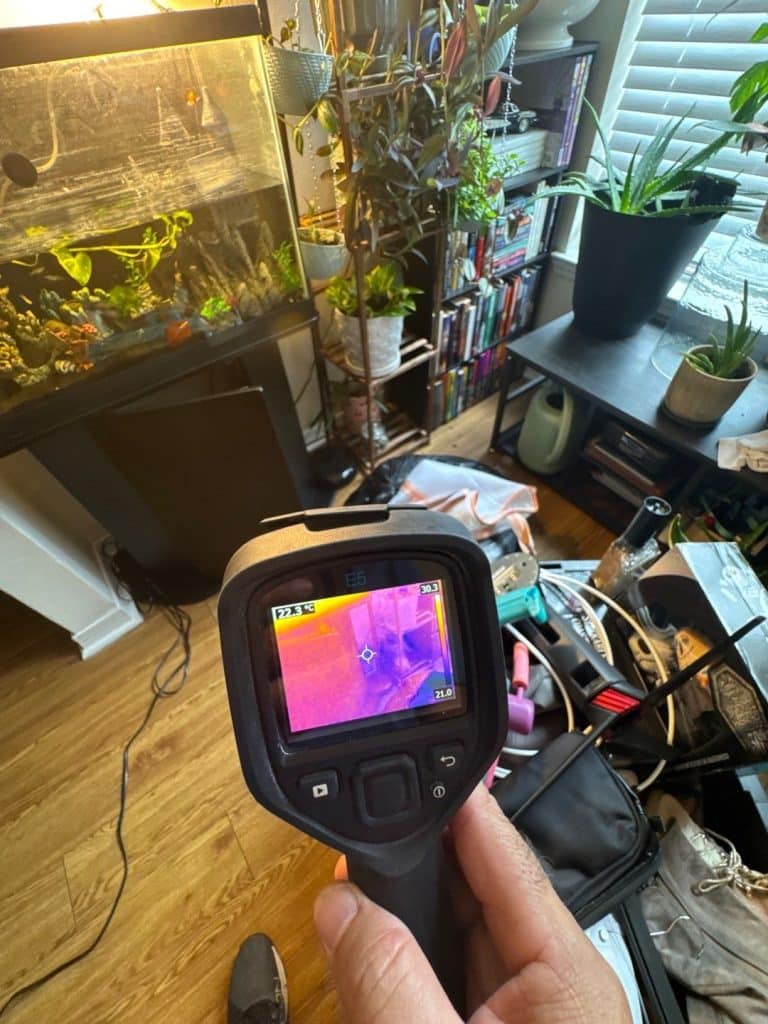
For property managers across Central Florida, a written contact and access plan can help coordinate maintenance, plumbing, and restoration professionals across units and common areas. Learn how our property-management restoration services in Central Florida can support that preparation.
1. Start the multifamily water damage response with safety
Keep residents and staff away from standing water near outlets, light fixtures, electrical panels, or equipment. Do not enter an area if water may have reached electrical systems or if a ceiling, floor, or other building surface appears unstable. Contact the appropriate emergency or qualified professional when there is a safety concern.
Do not ask residents or maintenance staff to handle contaminated water or enter a hazardous area. Sewage, floodwater, and water of unknown origin may require protective equipment and specialized cleanup. The EPA advises against using fans on water damage when the source may be contaminated; consult an experienced professional instead. (EPA water-damage cleanup guidance)
2. Stop the water source safely during a multifamily water damage response
If the water is coming from a valve or appliance staff can safely access, follow the property’s shutoff procedure. Otherwise, contact maintenance, a plumber, or the appropriate utility. Do not delay contacting our restoration team while trying to identify every detail of the leak or confirm the full scope yourself. Early involvement gives our team a chance to help prioritize inspections and drying while managers coordinate the multifamily water damage response.
Record what is known about the source and what is still uncertain. A visible ceiling stain, for example, identifies an affected area; it does not by itself confirm where the water originated.
3. Check beyond the first reported unit
Create an initial list of spaces to inspect. Depending on the building and the leak location, this may include:
- The unit where someone first saw water
- Units above, below, or beside it
- Hallways, storage areas, and other common spaces
- Nearby mechanical rooms or areas around shared building systems
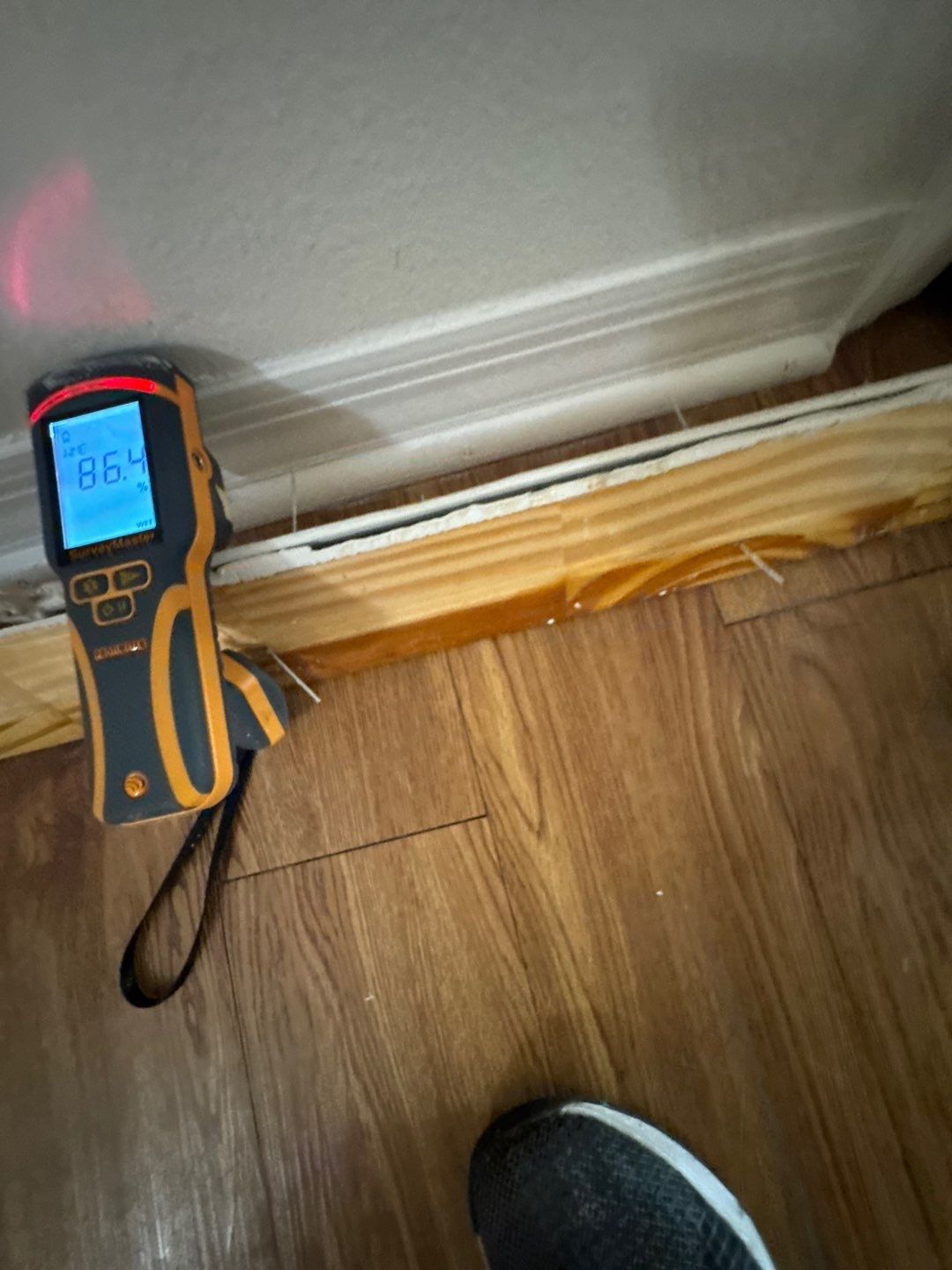
Coordinate access through the property’s established procedures. Mark each area as checked, affected, or still unknown. This helps the next shift continue the work without treating an uninspected space as cleared. Our restoration professionals can help plan checks across the affected footprint and use appropriate moisture-inspection tools to show where our team should inspect further.
4. Record a simple incident timeline
Start one incident log and update it as the response continues. Include:
- When the leak or water damage was reported
- Who received the report and who was assigned to respond
- The suspected source and whether anyone has confirmed it
- Units and common areas staff have checked and those they still need to inspect
- Actions taken, such as a shutoff or professional assessment
- Photos or video that document visible conditions, captured only when staff can do so safely
- Resident communications and important follow-up decisions
Keep observations separate from conclusions. For example, write “water visible at the ceiling light” rather than “the upstairs sink caused the damage” unless the cause has been confirmed. Follow the property’s recordkeeping and privacy procedures when storing photos and resident information.
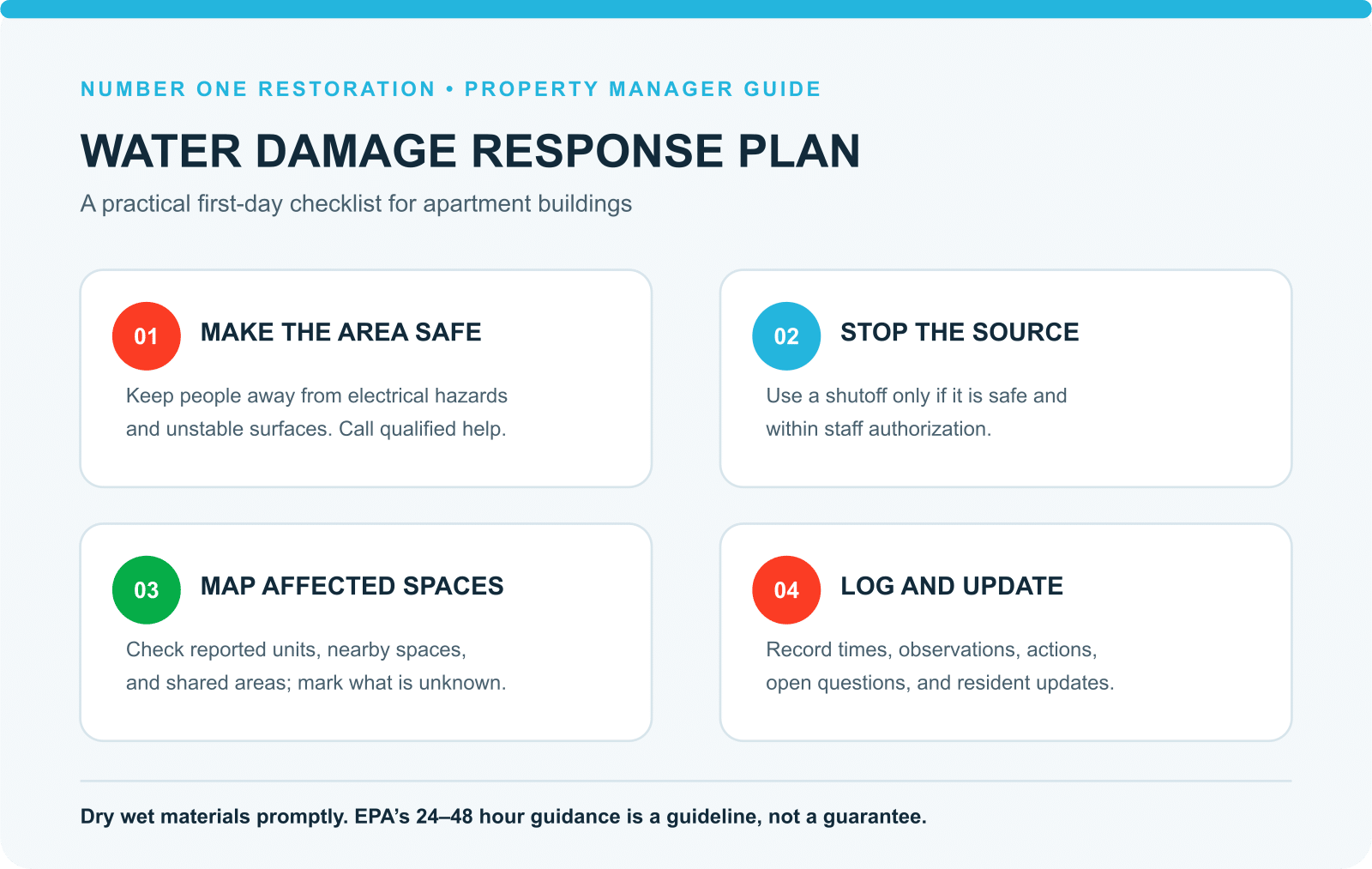
A four-step checklist for coordinating water-damage response across an apartment property.
5. Plan assessment and drying for the multifamily water damage response
Water can move behind walls and beneath flooring, so the response must examine more than visible pooling. Our qualified professionals can inspect affected materials, measure moisture, and determine whether the property needs drying, material removal, or further inspection. A visual check alone cannot confirm that hidden areas are dry.
The EPA recommends drying wet materials promptly, generally within 24–48 hours, to help prevent mold growth. This is a guideline, not a guarantee or a universal cutoff: mold may grow under some conditions, and drying visible surfaces does not prove that hidden materials are dry. (EPA mold and moisture guidance)
When the water source may be sewage, floodwater, or another contaminant, do not treat ordinary fans or routine cleanup as a substitute for a professional assessment. Follow the guidance for the specific water source and affected materials.
For planning purposes, our guide explains how long water-damage restoration may take; actual timelines depend on the conditions and work required at each property.
6. Keep residents informed
Give affected residents a clear point of contact and practical updates. Explain which areas our team plans to assess, whether residents need to provide access, and when they can expect the next update. Avoid promising a repair timeline, a mold-free outcome, or an insurance result before our team or the insurer reviews the facts.
If residents report new water, odors, visible mold, or changes in the affected area, add the report to the incident log and route it for follow-up. Florida’s health department identifies leaks, standing water, and other moisture sources as conditions that can contribute to indoor mold growth; moisture control is central to prevention. (Florida Department of Health: Mold)
What does the 24–48-hour drying guidance mean?
It is a prompt to act quickly, not a promise that mold will or will not develop by a particular hour. The EPA notes that drying water-damaged materials within this period can help prevent mold growth, but the right response depends on the water source and the materials involved. (EPA commercial-building water-damage guide)
Does a leak in one apartment mean only that unit needs inspection?
Not necessarily. Start with the location where someone first saw water, then assess nearby units and shared areas where water may have traveled. List uninspected spaces separately so staff do not treat them as unaffected.
A repeatable response plan protects the whole property
For property managers, the first day is about protecting people, coordinating safe access, and bringing our qualified restoration team into the response. A plan prepared in advance helps staff know whom to call, which shutoffs they can use, what to document, and how to communicate updates.
If your multifamily property in Central Florida has water damage, contact us to discuss hiring our team for a professional assessment and the next steps. Call us at 863-547-4470; our contact page lists our 24/7 emergency line, and you can also use our online contact form. When you contact us, tell us where you or a resident first noticed water, what caused it or may have caused it, which units and common areas you have inspected, where you saw damage, and which areas no one has inspected yet. Mention any safety concerns. Before you authorize work, confirm the proposed scope, pricing, availability, and insurance questions with us and your insurer.
Before an incident, add our contact details and your property’s access process to the response plan.
Sources
- U.S. Environmental Protection Agency, Water Damage Cleanup and Mold Prevention
- U.S. Environmental Protection Agency, Mold Course: Chapter 2
- U.S. Environmental Protection Agency, Mold Remediation in Schools and Commercial Buildings: Chapter 3
- Florida Department of Health, Mold


